 Many of our awesome patients often ask us questions like:
"Can you remove the coffee stains on my teeth?"
"What teeth whitening options do you have available?"
"Is it possible to close the gaps between my teeth?"
A common theme behind all of these questions is the outward appearance of our teeth. It's understandable that we often focus on aspects of our oral health like the shape of our teeth or how white they are. However, it's important that we don't overlook the foundation of our oral health which are the gums and bone surrounding our pearly whites! In today's post, let's talk about some steps we can take to maintain this foundation, sometimes referred to as our periodontal health.
Brushing Technique
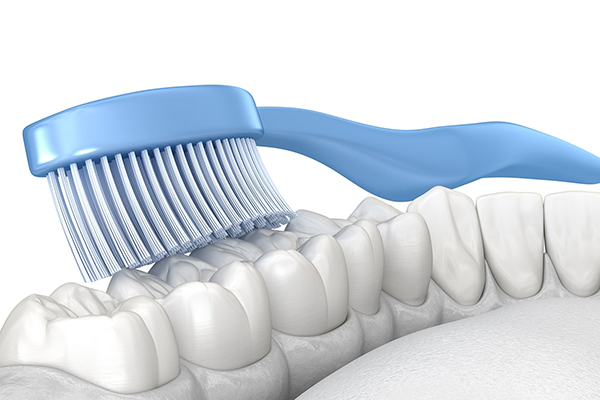
While many of us know to brush our teeth for at least 2 minutes twice a day, we're not always aware of the best techniques to use. Similar to how we tend to focus on the outward appearance of our teeth, we often forget about our gums when executing our home care. This is why we recommend a "sulcular" brushing technique that targets the bacteria that sits along the gum line. To execute this technique, hold your tooth brush at a 45 degree angle and focus on getting the bristles of the brush to gently slide underneath your gums. Try to use an electric toothbrush with soft bristles to make the process easier and gentler. When done properly you may even feel like your gums are being massaged!
Flossing Technique
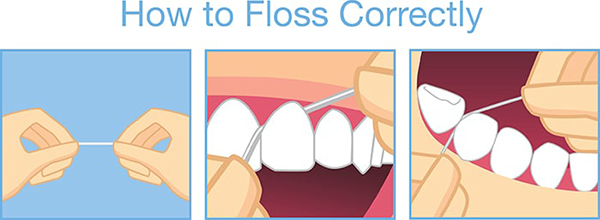
A discussion about good home care couldn't be complete without talking about everyone's favorite at home activity: flossing! Most of us know that flossing once a day, preferably before bedtime is a good habit to get into. We know that this can be a tall order after a long day, so we always recommend setting small achievable goals. If you're not flossing at all, start by flossing once a week. If you're doing it twice a week, try to increase that to three times a week! If you absolutely can't get yourself to floss, investing in a water flosser may be a great idea for you.
Just like with brushing, we want to focus on the bacteria sitting at and below the gums. Try to wrap the floss around your middle finger and use your thumb and index finger to manipulate the floss. Insert the floss between your teeth and focus on creating a C-shape around your tooth and go back/forth and up/down. Really focus on gently inserting the floss underneath your gums and watch that floss string disappears under your gums!
Supplementary Tools
While brushing and flossing your teeth are the foundations of good at home oral care, there are also supplementary tools that we can use. These include trays that carry medicaments for your gums, water flossers, mouth wash, and special tooth pastes! We'll talk about some of these in future posts.
Next time, we'll learn about the importance of regular dental visits for your gum health and the difference between different types of cleanings! Until then, remember to set reasonable and achievable oral health care goals for yourself!
Related Posts
A cosmetic dentist often hears concerns about whitening discomfort and can explain why sensitivity sometimes increases during treatment. Whitening products lift stains by allowing active ingredients to move through enamel, which can temporarily irritate the tooth's inner structures. Understanding what causes sensitivity and how to reduce it helps patients pursue a brighter smile more comfortably.Whitening…
Many people wonder when to call an emergency dentist for cuts, tears, or bites to the lips, cheeks, tongue, and gums. While these soft tissue injuries can look scary, prompt dental care can protect comfort, reduce infection risk, and save teeth. A general or family dentist who handles urgent cases can guide this care right…
Loose teeth as a child can be exciting, but loose teeth as an adult are often worrisome and frustrating. Fortunately, general dentistry has ways to repair and care for them. If you have a loose permanent tooth, see your dentist right away to determine why it is loose and develop a plan to treat it.To…
In a general dentistry office, dental bonding is used to repair teeth that have sustained minor chips, cracks, or breaks. Bonding's benefits go beyond the repair of damaged teeth. This method of fixing broken teeth can also be used for other cosmetic purposes, such as closing a gap or changing the color of a tooth.…